The medication isn't always the problem.
For people with Mast Cell Activation Syndrome, it's often the inactive ingredients — the excipients — that trigger a reaction.
Every medication is a cocktail of excipients.
Binders, coatings, dyes, fillers, stabilizers. A single tablet can contain a dozen inactive ingredients.
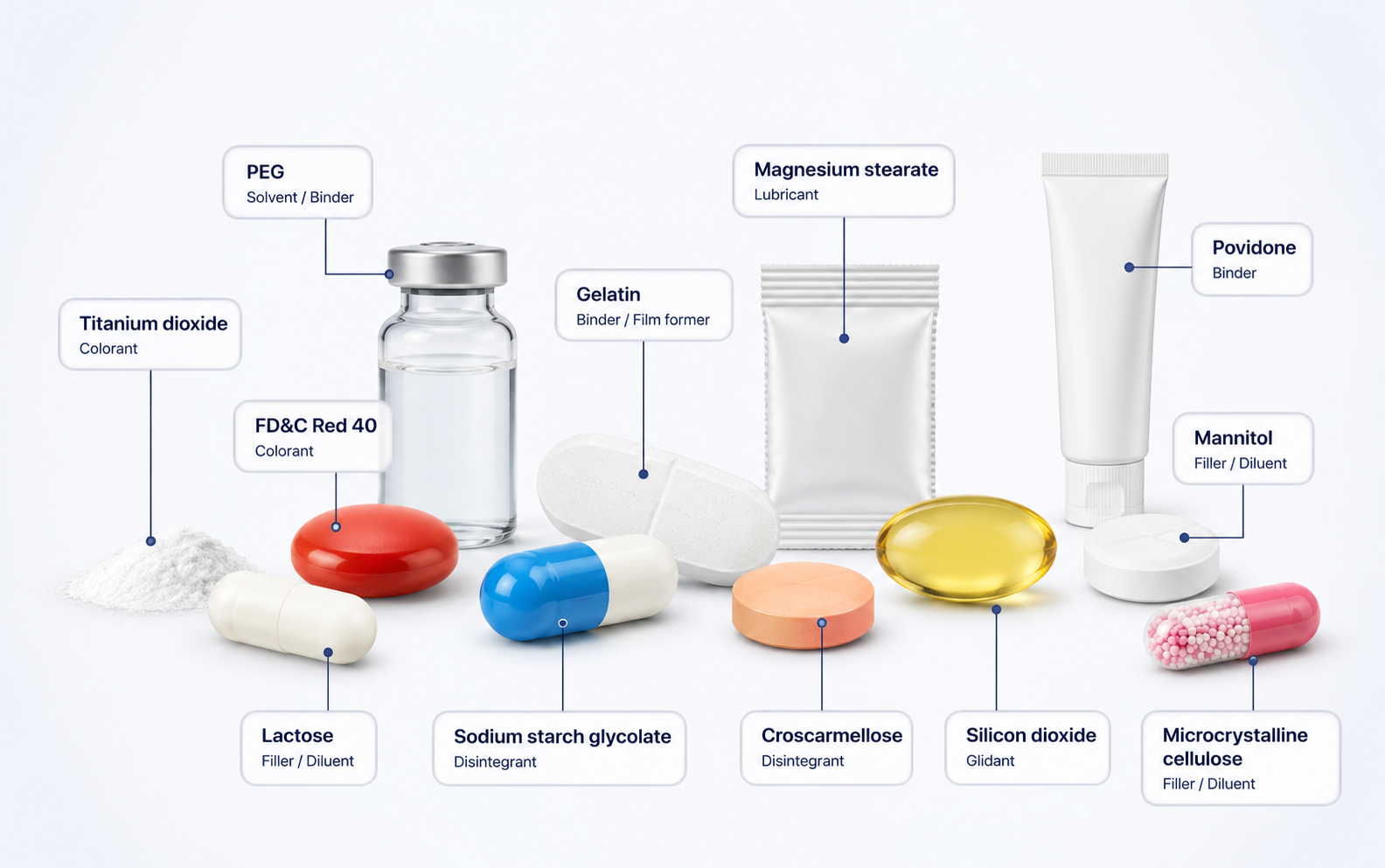
Any of them could be your trigger.
Mast cell patients react unpredictably. Every medication mixes a different set — finding your triggers by trial and error takes years.
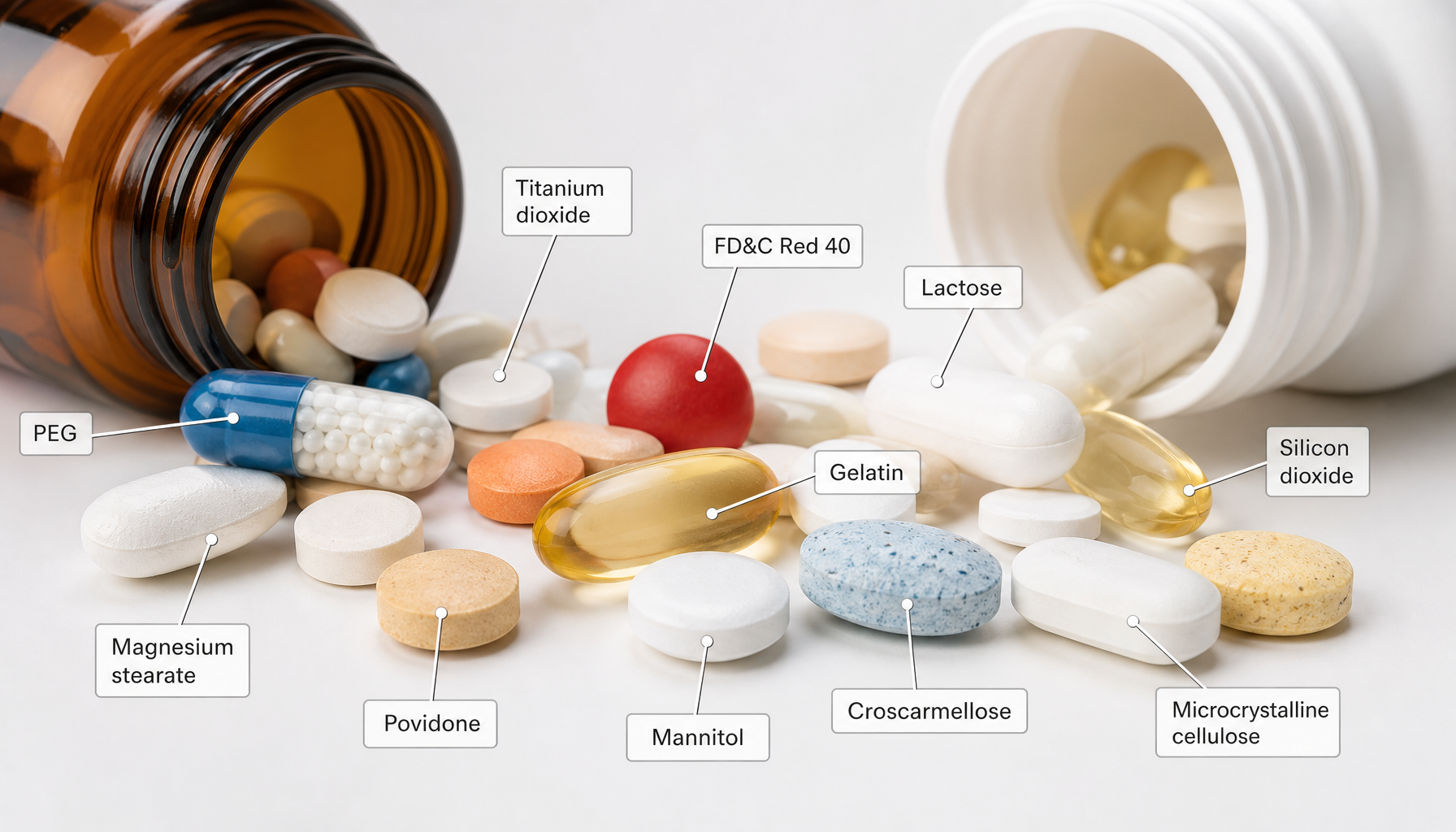
We help you find the pattern.
Log what you take, rate how you tolerate it. We surface the excipients that keep showing up in your bad reactions.
Three steps between you and your triggers.
- 01
Log by NDC
Enter your medication or supplement. We pull the full active and inactive ingredient list from the FDA.
- 02
Rate tolerance
For each item, mark whether you tolerated it well, were unsure, or reacted poorly.
- 03
See the pattern
Get a scored report of the excipients showing up in the items you don't tolerate.
Finding your triggers can change how you feel.
In Mast Cell Activation Syndrome, medication reactions are often driven by the inactive ingredients — dyes, fillers, PEGs, gelatin — rather than the active drug itself. These reactions are easy to miss, because the same excipient shows up across many unrelated medications and supplements. Identifying and avoiding the specific excipients a patient reacts to is a cornerstone of management and can reduce repeat reactions. Tracking what you take and how you tolerate it is what makes those patterns visible.
This isn't medical advice. Always talk to your clinician before changing a medication.
Start tracking your excipients.
Free. Your data stays private. Built by and for the MCAS community.